MareNostrum 5 Expands to Accommodate AI: Receives 129 Million Euros for the Upgrade
Ranked as the 14th supercomputer globally on the TOP500 list, MareNostrum 5 is located in Spain and continues to evolve as a dynamic system. It has recently secured significant funding for an essential upgrade that will enable it to handle training and inference tasks for AI models.
Funding Details for MareNostrum 5
The Barcelona Supercomputing Center (BSC) reports that the European High Performance Computing Joint Undertaking (EuroHPC JU) has signed a contract to acquire new hardware components for MareNostrum 5. This initiative involves collaboration with Fsas Technologies (Fujitsu) and Telefónica. The budget approaches 129 million euros, with financing split evenly: 50% from EuroHPC and the remaining 50% from Spain, Portugal, and Turkey. The upgrade is scheduled for installation in the first half of 2026. According to European Commission documents, the project began in July 2025.
Adapting to AI Demands
This enhancement focuses entirely on workloads related to artificial intelligence and machine learning, rather than simply expanding existing capabilities. Another key goal is to strengthen Europe’s digital sovereignty, which will help minimize technological dependencies and avoid unwanted technology transfers outside the EU.
Shifting Focus from HPC to AI
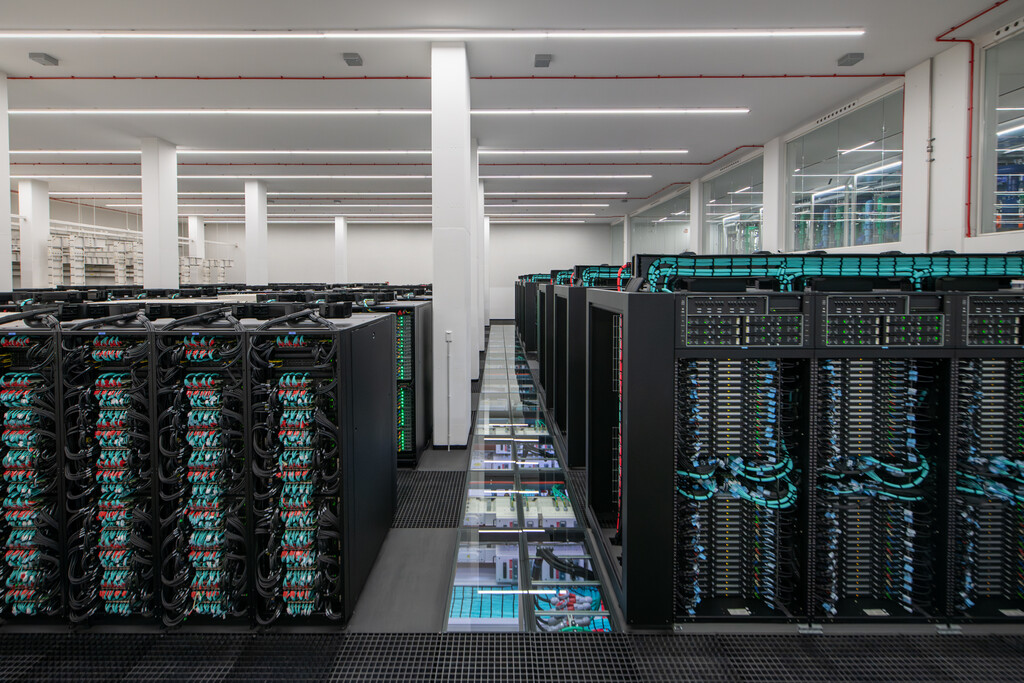
The expanded architecture of MareNostrum 5 will incorporate specialized computing partitions, including at least one for training large language models (LLMs) and another for inference. Currently, the supercomputer features five distinct partitions and delivers a performance of 175.30 PFLOPS (FP64, Linpack) according to the TOP500 list, or 215.40 PFLOPS as per EuroHPC. Its total power capacity stands at 20 MW.
Targeting 30 Exaflops FP4 for AI
Technical documents outline a goal of achieving 30 exaflops FP4, which represents a substantial leap. However, the current 0.17 exaflops FP64 is dedicated to traditional high-performance computing (HPC). These FP4 exaflops are intended for massive training and inference operations and cannot be directly compared to the FP64 figures.
Potential NVIDIA Involvement
While the technical documentation does not specify the exact hardware, it describes a GH72 partition with specifications that closely match the DGX GB200 NVL72 supercomputer. Details on the number of GPUs, their type, or memory capacity are not provided, but minimum requirements include “180 GB of HBM3e memory or higher.” This excludes models like the H100 and H200 but aligns with options such as the B200/GB200 (currently used in MareNostrum 5), B300/GB300, or AMD Instinct MI350/MI355X, which could offer up to 256 GB of HBM3e memory based on market data.
Development of a Proprietary Chip
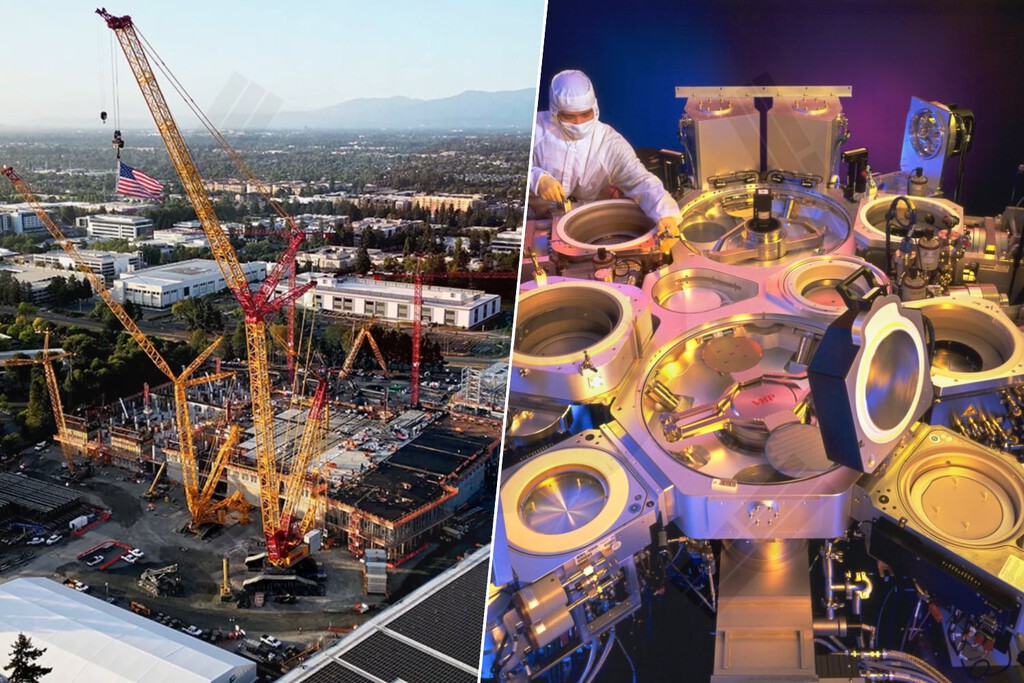
In parallel, the BSC announced positive progress on its initiative to create a custom chip. The Cinco Ranch TC1, developed by the Barcelona Zettascale Lab, has been validated, and its experimental launch was successful. This chip is based on RISC-V architecture and utilizes Intel’s 3 nm manufacturing technology. It operates at up to 1.25 GHz and represents an important initial step in the BSC’s semiconductor design efforts, despite its modest scale.
Europe’s Supercomputing Landscape
This effort is part of EuroHPC’s program to advance supercomputing in Europe. The initiative currently includes 12 supercomputers across the continent, with standout examples like Jupiter in Germany (ranked 4th on the TOP500 list) and the upcoming Alice Recoque in France. These will become the first exascale systems in Europe.